
Tile Leveling and Lippage: Why Flat Tile Takes More Than a Level
Run your hand across a finished tile floor and you can feel the difference between good tile work and great tile work. On a great floor, your fingers glide from one tile to the next. On a rushed one, they catch on edges that sit a little higher than their neighbours. That catch has a name: tile lippage.
A spirit level helps, but it cannot keep every tile edge flush while the setting material cures. At Artifex Reno, every tile goes down on a mechanical leveling system. Here is what that means, why it matters and what it looks like on real Toronto projects.
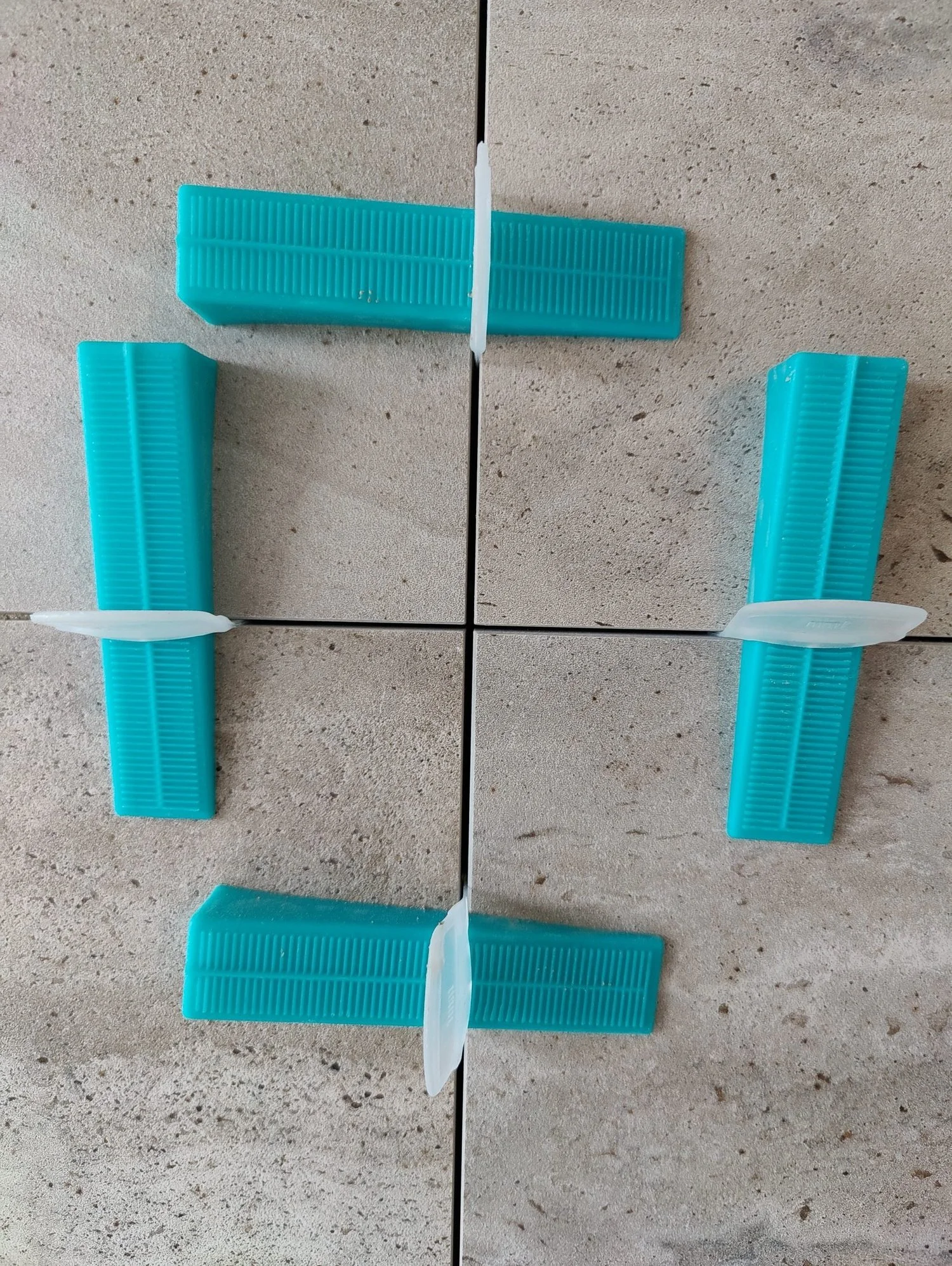
What tile lippage is
Lippage is the height difference between the edges of two tiles that sit side by side. Grout lines are meant to be the only break in a tiled surface. When one edge rises above the next, the floor or wall stops reading as one plane and starts reading as a patchwork.
Lippage is not only a looks problem. A raised edge can catch a sock or a bare foot. And on a shower floor, an uneven edge works against water that should be moving cleanly to the drain.
Why a level alone is not enough
A level tells you whether a surface is flat at the moment you check it. Tile is set into wet material, and each tile can settle or tilt slightly as it is bedded and as you set the next one beside it.
That is the job of a mechanical leveling system. Clips sit in the joints under the edges of neighbouring tiles, and wedges or caps lock the faces of those tiles to the same height. The tiles are held in plane until they set. Then the tops of the clips are removed, leaving flat, even joints ready for grout.
Our standard is simple: mechanical leveling on every install. Lippage you can catch a fingernail on doesn't leave our sites.
Flat tile starts with a flat surface
Leveling clips keep tile edges flush with each other. They do not fix a floor that dips or a wall that bows. The surface under the tile has to be prepared first. As we covered in our post on what proper bathroom waterproofing looks like before the tile goes on, the surface must be flat enough for the planned tile and coordinated with transitions at doors and adjacent rooms.
That is why substrate preparation, drainage and waterproofing come before the tile on every bathroom we build, and why every floor gets an uncoupling membrane.
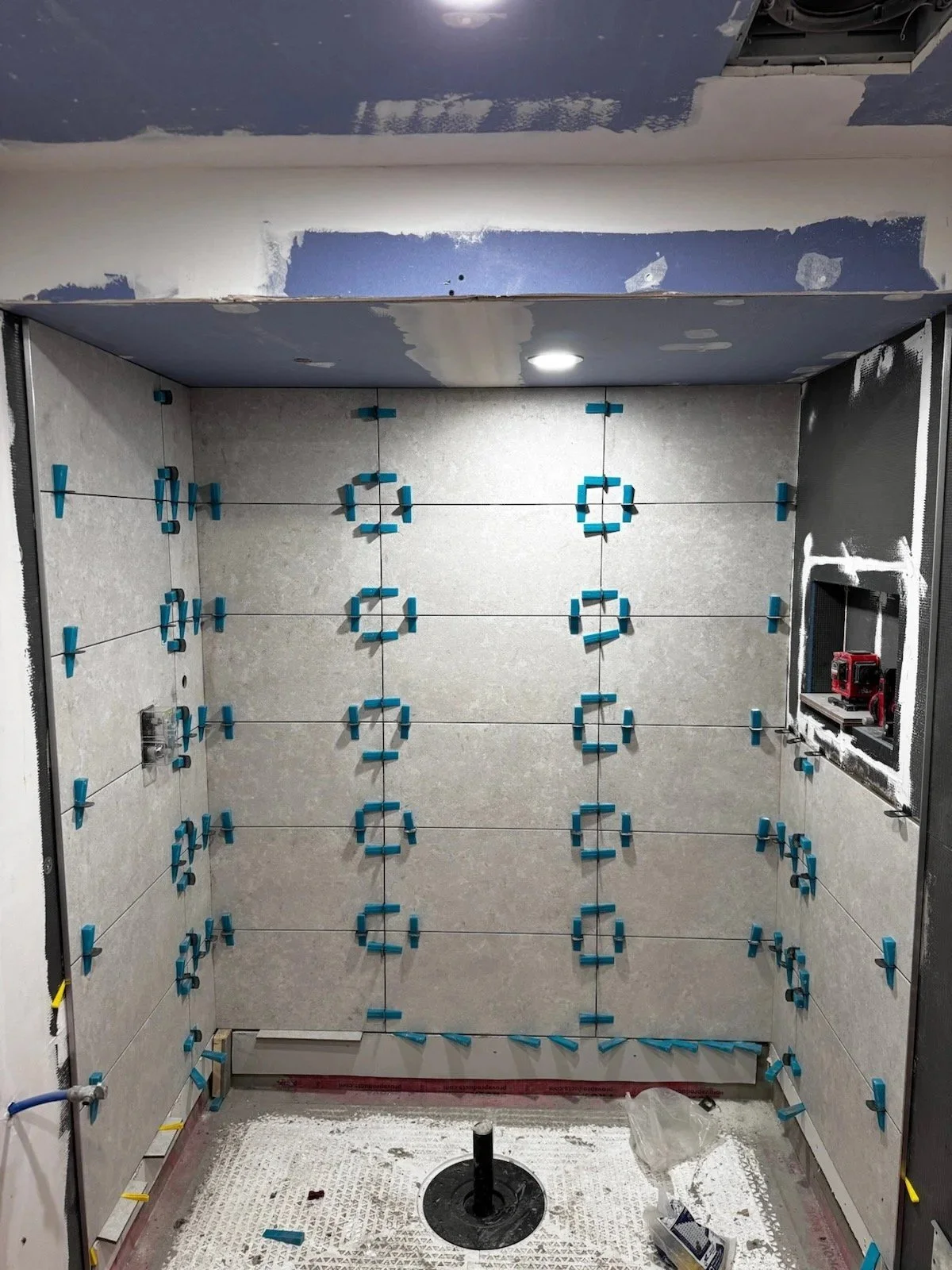
Leveling on walls and floors
Leveling is not only for floors. In the Toronto shower above, the clips run along every joint on the back and side walls, around the niche and down to the floor. Once they came off, the walls were finished flat and the floor was set in a pebble mosaic around the drain.
Floors that slope add another layer. In a shower, the floor has to pitch toward the drain, so the tile is not flat in the sense of horizontal. It has to be flat in the sense of even: every tile following the planned slope, with no edge proud of the next. In another Toronto shower, the floor tile was cut on diagonals running out from a square drain, with clips holding each section in line as it pitched toward the drain.
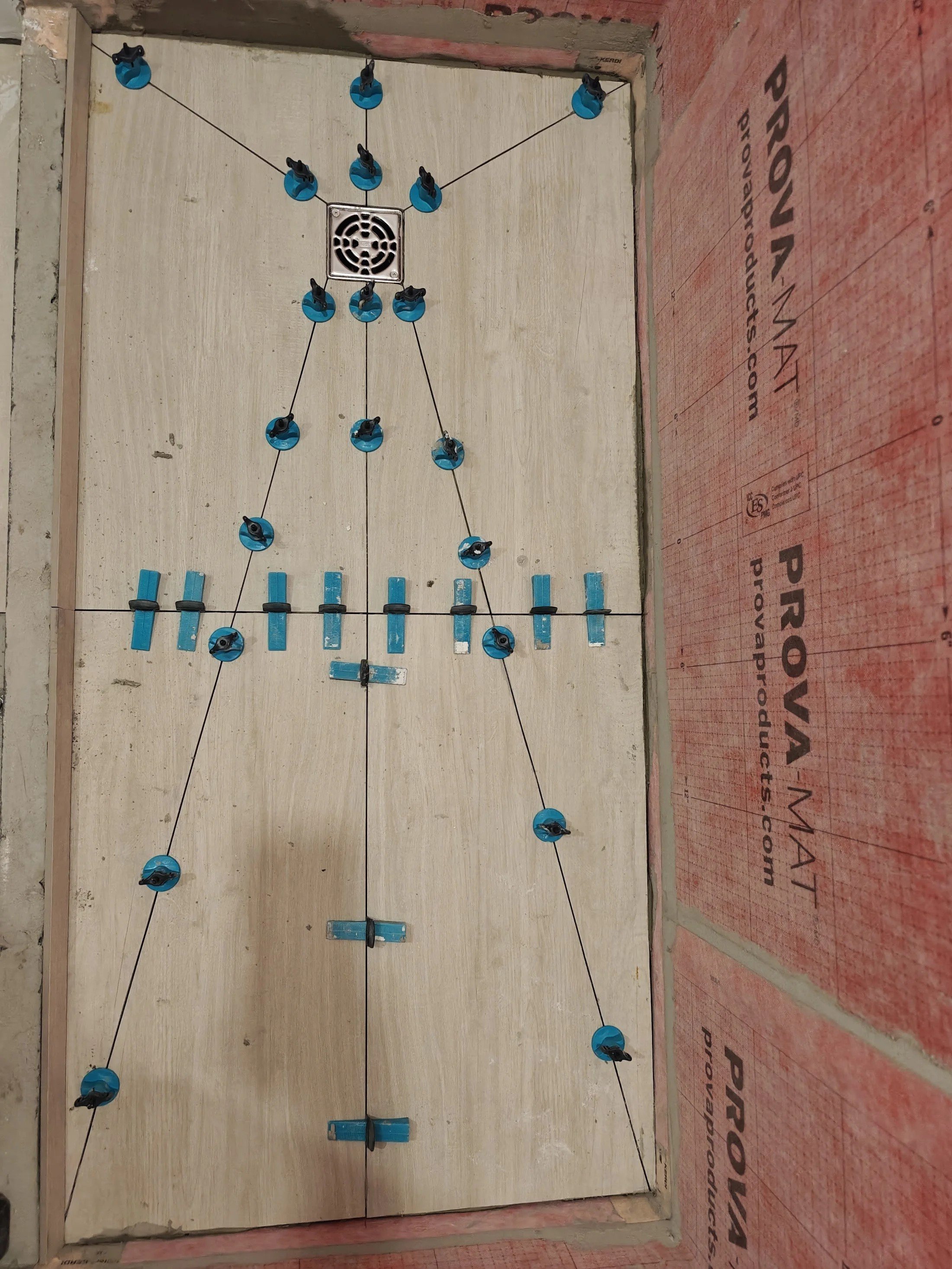
We covered how slope, drain position and layout fit together in curbless shower tile work: slope, drain and layout before the last tile.
Why it matters more with larger tile
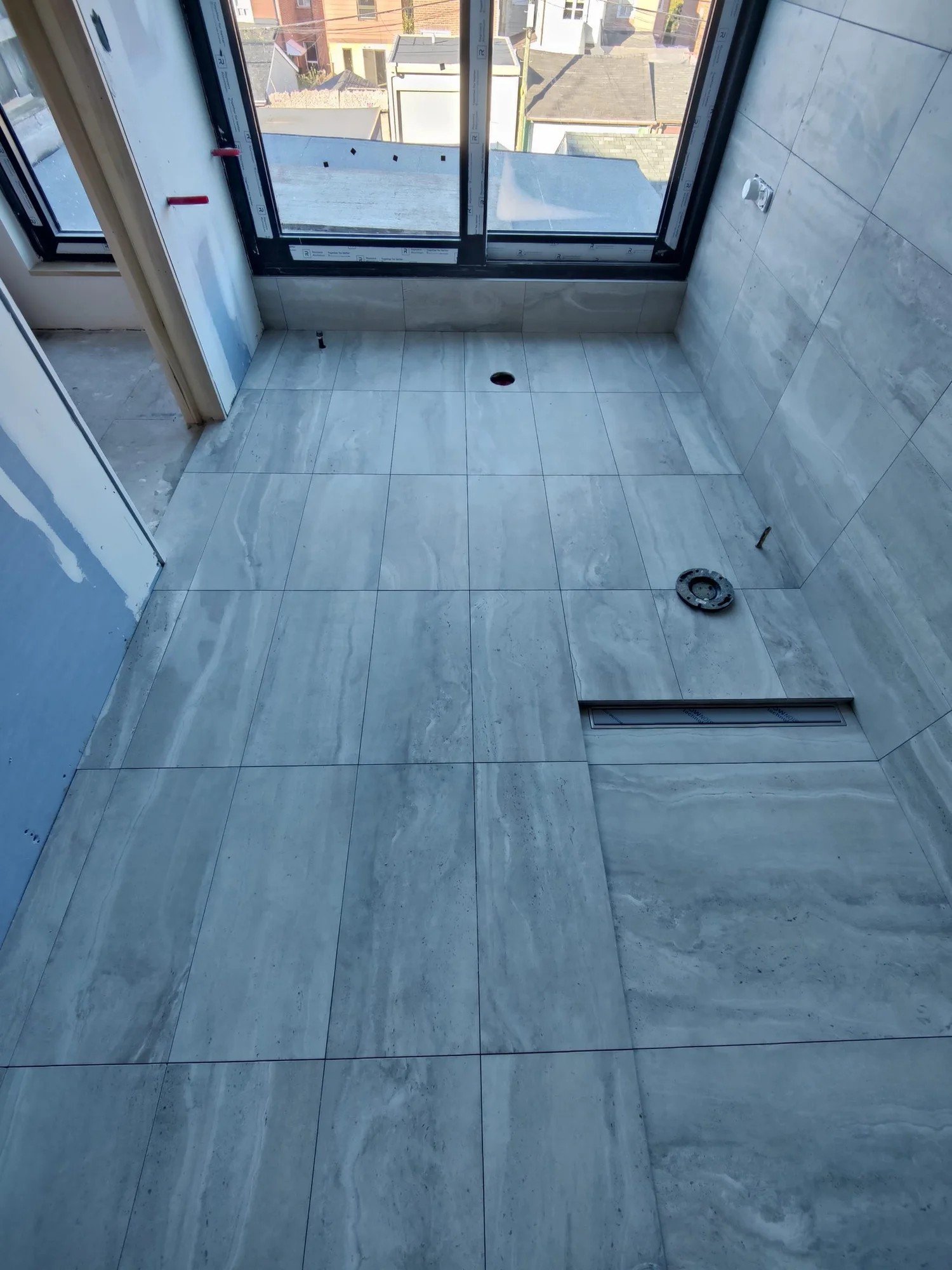
The bigger the tile, the more lippage shows, as on long stone-look floors like the one below. A long tile has more length to bow or tilt, and there are fewer grout lines to break up the view, so the eye follows the surface uninterrupted.
What to ask your tiler
Before you hire anyone for a bathroom or floor, it is worth asking a few plain questions:
- How do you keep tile edges flush while the setting material cures?
- How is the surface checked and prepared before tile goes down?
- Is the tile layout planned before the first cut?
- Who on the crew does the tile work?
At Artifex, one crew handles the build from substrate to the finished room, and our team includes a dedicated tiler.
Frequently asked questions
What is tile lippage? It is the height difference between the edges of two neighbouring tiles. You can see it as shadows along the joints and feel it as edges that catch.
Do you use a leveling system on every job? Yes. Every tile we install goes down on a mechanical leveling system.
Can leveling clips fix an uneven floor? No. They keep tile edges flush with each other. The surface underneath has to be prepared and flat enough for the planned tile first.
Do you level wall tile too? Yes. Clips are used on walls as well as floors, as the shower photos above show.
What does a tile or bathroom project cost? Every project gets a fixed written quote after a walkthrough, with materials, timeline and price in writing before work starts. The number you approve is the number you pay.
Start with a walkthrough
Planning a bathroom or tile project in Toronto, Mississauga or elsewhere in the GTA? Nazar will come to see the space, talk it through with you and follow up with a written scope. Call or text (647) 223-4051 or request an estimate. See more of our bathroom renovation work and projects.
